Sparking a LEAP forward
Ascent Partners Once Again with America for Bulgaria Foundation (ABLE) and Babson College for Leadership Education in America Program (LEAP)
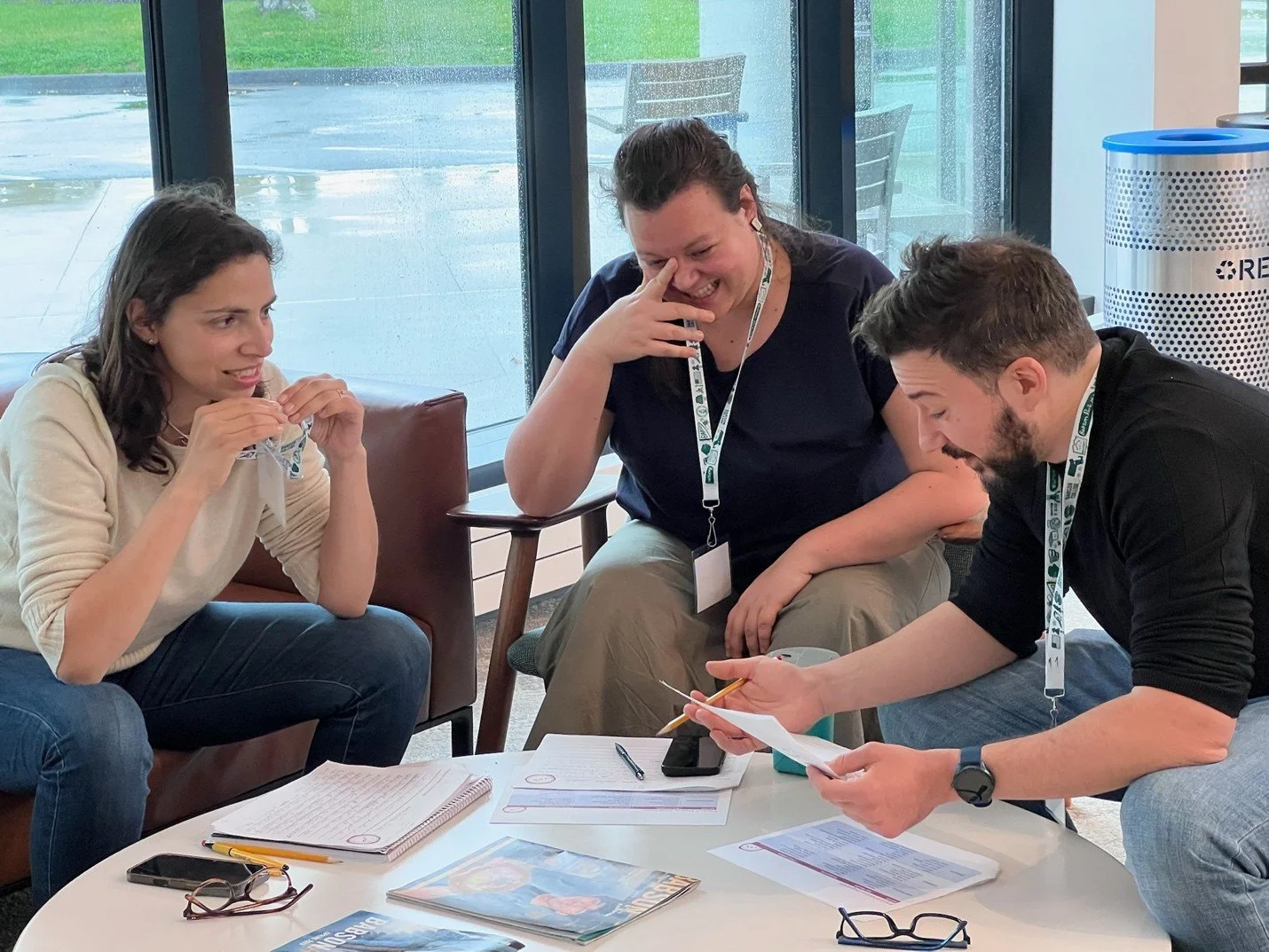
For the past four years, we have taught collaborative change leadership in a program that brings together leaders from the public, private and NGO sectors. Working with the team at America for Bulgaria Foundation, ABLE and Babson College, we have crafted a multi-day program that teaches motivational psychology, influence, collaboration, negotiation, reinventing stakeholder mapping, and more to cohorts of Bulgarian change leaders from multiple sectors. It’s an energizing, engaging program, where participants shift from classroom learning to group activities, individual reflection and planning; from serious thought to laughter. We pride ourselves on designing practical, paradigm-changing deep dives that stick with people. Even years later, participants reach out to describe how they use what they’ve learned. But the most meaningful moment in this program, participants say, is actually none of these.
Before LEAP starts, each person sits down with us, privately. They tell us stories that they are especially proud of, from their recent past. We learn what matters to them, what energizes them, and how they do what they do. About halfway through our program, we sit down with each person again, and share what we learned. Why? Research shows that it is hard for people to see their own capacity with any degree of accuracy. Dunning and Kruger found that people tend to inflate their levels of competence[1] (i.e., the Dunning-Kruger effect), and later, Dunning and Ehrlinger found that our self-image and ideas about our own competence can lead us to underestimate ourselves[2]. So even if someone has improved, their self-image will not reflect it. Ignorance is not bliss – especially for leaders. Self-doubt will make you hesitate. Self-aggrandizement will trip you up. And true, honest feedback is astonishingly rare – especially for leaders.
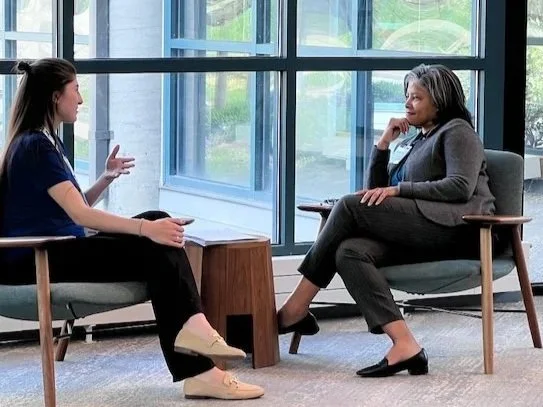
Thanks to those interviews, as well as our time in the classroom, we have the privilege of getting to know each one of these leaders deeply. We consider all that we’ve learned about who they are, where they are, and the dreams that they want to grow into, and carefully – and with caring – we walk them through the person that we see; their strengths, opportunities for growth, and how it all aligns with what motivates them. And we ask them what it will take to unlock their gifts, in light of their current opportunities, and in service to their dreams.
It’s a rare feedback meeting where participants don’t discover something about themselves. They ask questions, listen, share, and pause, thinking over what we’ve shown them. And yes, there can be tears.
I think of that hour as being both compassionate and a little bit ruthless. Compassionate, because we help people see the gifts they may not have fully appreciated. And a little ruthless, because a clouded self-image can give us an excuse to step away from a challenge. I don’t have what it takes, you can tell yourself. But there we are, telling you that you can – if you want to. We remind people of their aspirations, and who they want to become. Invite them to sit with, wrestle with the gap between where they are and want to be. Walk them through the work it will take to grow. Tell them that we are here, ready to advise – or simply cheer them on over the years to come.
There’s a reason for why we do this. When people feel that they are truly seen, truly supported, then their capacity to learn is unlocked.[3] Research shows that when advice for development is given in the context of a personal vision, that advice – and relationship - is more impactful, meaningful – and lasting.[4] For as engaging as this program may be, that hour of feedback may be the difference between a program that is merely memorable, and a once-in- a-lifetime experience that sparks growth.
People walk differently, when they see their gifts. When they see themselves, deeply and truly, and feel seen and valued by others. Walking out of that room, they know exactly what they have, to enable them to go forward. They stand taller, their smile is deeper, their stride is stronger for it. And the impact?
Ask them. They’ll tell you.
Ziva Mann,
Director, Assessment & Development, Ascent
[1] Kruger J, Dunning D. Unskilled and unaware of it: how difficulties in recognizing one's own incompetence lead to inflated self-assessments. J Pers Soc Psychol. 1999 Dec;77(6):1121-34. doi: 10.1037//0022-3514.77.6.1121. PMID: 10626367.
[2] Ehrlinger, J., & Dunning, D. (2003). How chronic self-views influence (and potentially mislead) estimates of performance. Journal of Personality and Social Psychology, 84(1), 5–17. https://doi.org/10.1037/0022-3514.84.1.5
[3] Discussed in some detail (with citations of peer-reviewed journal articles) in Resonant Leadership by Richard Boyatzis and Annie McKee (2005).
[4] For more on effective coaching and resonant relationships, check out: Helping people change, by Richard Boyatzis, Melvin Smith, Ellen Van Oosten